
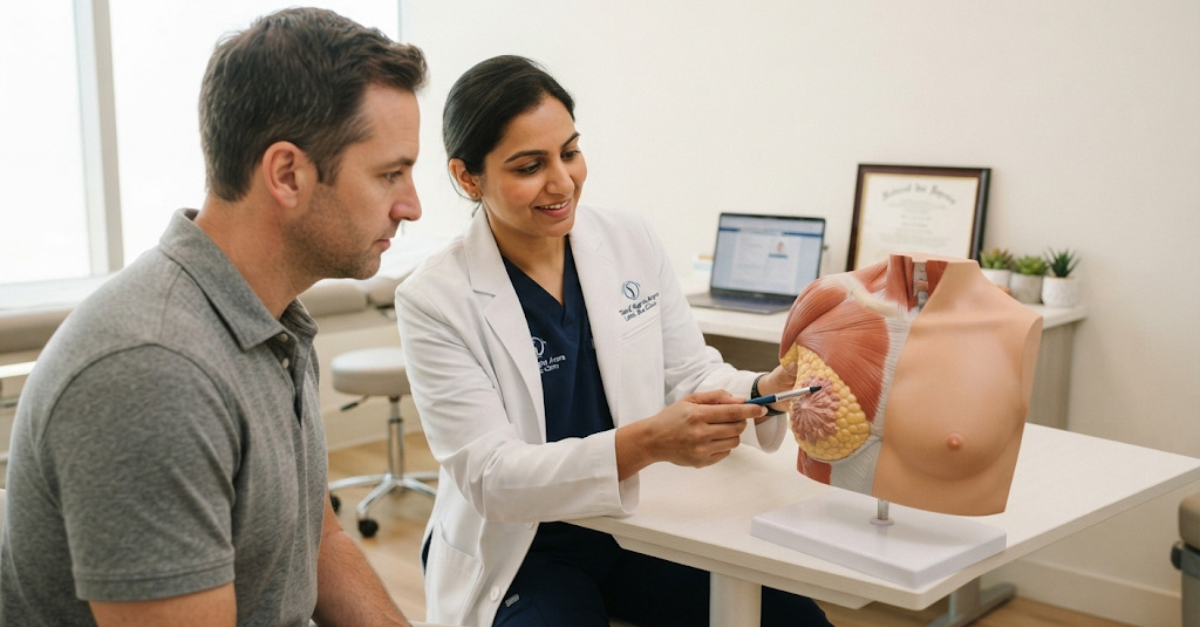
A change in chest appearance can sometimes become a concern for men, particularly when the breasts start looking fuller or more prominent than usual. Some men notice a small amount of swelling around the nipples, while others experience a more noticeable increase in breast size.
This condition is called gynecomastia. It develops when glandular breast tissue in males increases in size, often because of changes in hormone levels.
Gynecomastia can occur in teenagers as well as adult men. In some cases, the enlargement settles without treatment, while in others it may remain for years and require medical attention.
Understanding why gynecomastia develops, how to recognise it and which treatments are available can help you decide when to seek professional advice.
Understanding Gynecomastia in Men
Gynecomastia is the enlargement of glandular breast tissue in males. It can affect the right breast, left breast or both sides.
The condition is commonly associated with changes in the relationship between two hormones: testosterone and estrogen.
Although testosterone is the primary male sex hormone, estrogen is also naturally present in men. Both hormones play important roles in the body. When their balance changes, breast glandular tissue may respond by growing.
The amount of enlargement can vary from one individual to another. Some men develop a small, firm area beneath the nipple, whereas others experience more noticeable breast fullness.
It is important to understand that gynecomastia is not simply another term for having excess body fat around the chest. The distinction matters because the treatment approach can be different.
Why Does Gynecomastia Develop?
There is no single cause behind every case of gynecomastia. The condition can develop at different stages of life and may be associated with hormonal changes, medication use or certain health conditions.
1. Changes in Hormone Levels
Hormonal imbalance is one of the main reasons for male breast glandular tissue enlargement.
When testosterone levels decrease relative to estrogen activity, breast tissue may become more sensitive to hormonal stimulation.
These changes can happen naturally during different stages of life or because of an underlying medical condition.
2. Gynecomastia During Teenage Years
During puberty, the body goes through several hormonal changes. Testosterone and estrogen levels do not always increase at the same rate, which can temporarily affect breast tissue.
Some teenage boys notice swelling or a small lump beneath one or both nipples.
In many cases, this type of gynecomastia improves naturally as puberty progresses. However, persistent enlargement, significant discomfort or unusual symptoms should be assessed by a doctor.
3. Age-Related Hormonal Changes
Hormone levels and body composition change as men grow older.
A gradual reduction in testosterone, changes in body fat and certain age-related health conditions may contribute to breast tissue enlargement.
Older men experiencing new breast changes should not automatically assume that ageing is the only cause. A medical assessment can help identify other possible factors.
4. Excess Body Weight and Chest Fat
Weight gain can make the male chest appear larger because fat accumulates around the breast area.
This is sometimes called pseudogynecomastia.
Unlike true gynecomastia, which involves glandular tissue, pseudogynecomastia primarily involves excess fatty tissue.
Some men may have both glandular enlargement and excess fat, so a physical examination is useful for understanding the actual condition.
5. Medicines and Other Substances
Certain prescription medicines and substances can interfere with hormone activity and contribute to breast enlargement.
These may include some medicines used for prostate conditions, heart-related problems and mental health conditions. Anabolic steroids and certain other substances can also contribute.
If you notice breast enlargement after starting a new medicine, discuss it with your prescribing doctor. Do not discontinue prescribed treatment independently.
6. Health Conditions That Affect Hormones
Some medical conditions can influence the body’s hormone production or metabolism.
Examples include:
- Low testosterone levels.
- Thyroid disorders.
- Liver disease.
- Kidney disease.
- Certain testicular conditions.
- Other hormone-related disorders.
Identifying an underlying medical issue is important because treating that condition may be part of managing gynecomastia.
Signs That May Indicate Gynecomastia
The appearance of gynecomastia is not identical in every patient. Some men notice gradual changes, while others become aware of the condition because of tenderness or swelling.
Here are some signs worth discussing with a doctor.
Noticeable Fullness Around the Nipple
One of the common signs is an increase in tissue beneath the nipple or areola. The area may feel firmer than the surrounding chest fat.
Enlargement of One or Both Breasts
Breast enlargement may occur on both sides, but it can also affect only one breast.
Uneven enlargement does not necessarily indicate a serious condition, but new or unusual changes should be examined.
Tenderness or Sensitivity
Some men experience discomfort when the chest is touched or pressed. Tenderness may be more noticeable when the enlargement develops recently.
Changes in Chest Shape
The chest may appear rounded or fuller, particularly around the nipple area. This can become more noticeable when wearing fitted shirts.
Self-Consciousness About Appearance
Although gynecomastia is a physical condition, its impact is not limited to physical symptoms.
Some men avoid swimming, gym activities, changing rooms or social situations because they feel uncomfortable about their chest appearance.
When to seek medical attention: A hard or fixed lump, nipple discharge, bleeding, skin changes, nipple retraction or a rapidly growing one-sided lump requires prompt medical evaluation.
Gynecomastia vs Excess Chest Fat: Understanding the Difference
A fuller chest does not always mean that a man has gynecomastia. In some cases, the change in appearance is caused by fat accumulation, while in others, it results from an increase in glandular breast tissue.
Although both conditions can make the male chest look enlarged, their underlying causes are different. This distinction is important because losing weight may help with excess chest fat, but it may not resolve enlargement caused by glandular tissue.
Here is how the two conditions differ:
| Comparison | Gynecomastia | Pseudogynecomastia |
|---|---|---|
| Tissue involved | Enlarged breast glands | Accumulated fatty tissue |
| Chest appearance | Often concentrated around the nipple area | Usually more evenly distributed across the chest |
| Common contributing factors | Hormonal changes, medicines and certain health conditions | Increased body weight and fat accumulation |
| Possible management | Observation, medical management or surgery | Weight management and selected cosmetic procedures |
In some individuals, both glandular tissue and excess fat are present together. Therefore, the appearance of the chest alone cannot confirm the condition. A clinical examination is the best way to understand what is causing the enlargement.
How Is Gynecomastia Identified During a Medical Examination?
Before deciding on treatment, it is important to establish whether the enlarged chest is related to glandular growth, excess fat or another medical issue.
A doctor usually starts by understanding the patient’s experience and how the condition has developed over time.
The assessment may include several steps:
Review of Symptoms and Medical Background
The doctor may ask when the breast enlargement first appeared, whether it has increased recently and whether there is any pain, tenderness or nipple-related change.
Information about previous illnesses, ongoing medication, supplements and hormonal health can also help identify possible contributing factors.
Examination of the Chest Area
A physical assessment helps the doctor understand the location, consistency and extent of the enlarged tissue.
Both sides of the chest may be examined to identify differences in size, tissue distribution and other unusual findings.
Laboratory Investigations
When a hormonal or medical cause is suspected, blood investigations may be recommended. Depending on the clinical findings, these could include hormone levels and tests related to thyroid, liver or kidney function.
Imaging When Clinically Required
A breast ultrasound or mammogram may be advised if the examination raises questions that need further investigation.
Additional tests may be considered if an underlying condition is suspected.
The investigation plan is individualised. Not every person with enlarged male breasts requires blood tests and imaging.
Which Treatment Is Appropriate for Gynecomastia?
There is no single treatment that suits every patient. The right approach depends on the reason for breast enlargement, how long it has been present and whether glandular tissue or fat is responsible.
A doctor may recommend one of the following approaches.
1. Regular Observation
In younger males, breast enlargement can sometimes occur as part of normal pubertal development.
When the findings are consistent with temporary pubertal gynecomastia and there are no concerning symptoms, the doctor may recommend waiting and monitoring changes over time.
This avoids unnecessary treatment in cases that may resolve naturally.
2. Addressing Medical or Medication-Related Causes
Sometimes breast tissue enlargement is connected to another health condition or the use of particular medicines.
In these situations, treatment may focus on managing the underlying issue. A doctor may review the patient’s existing medication and discuss suitable alternatives when medically appropriate.
The original prescription should never be stopped without professional guidance.
3. Medical Treatment for Selected Patients
Medication may be considered in certain cases after evaluating the patient’s symptoms, hormone-related findings and duration of breast enlargement.
The decision depends on the individual clinical situation. Medicines are not routinely required for every patient, and their effectiveness can vary.
4. Surgical Correction of Persistent Breast Enlargement
For men with long-standing glandular enlargement, surgery may be an option when the condition causes ongoing physical or appearance-related concerns.
The aim of gynecomastia surgery is to create a flatter and more balanced chest by addressing excess breast tissue and fat.
Depending on the patient’s requirements, the surgeon may recommend:
- Fat removal through liposuction: Helps reduce excess fatty deposits and refine the chest shape.
- Removal of glandular tissue: Addresses firm breast tissue that cannot be adequately corrected through liposuction alone.
- A combination of techniques: May be appropriate when both glandular enlargement and excess fat contribute to the chest appearance.
The surgical plan is based on tissue composition, skin quality, chest structure and the patient’s expectations.
Read more about the Gynecomastia Surgery procedure at Skintillate Clinic to understand the available surgical approach.
Situations in Which Gynecomastia Surgery May Be Worth Considering
Breast enlargement does not automatically mean that surgery is required. However, a surgical consultation may be useful when the condition continues to affect a person’s comfort or confidence.
Some situations in which surgery may be discussed include:
- The enlarged breast tissue has remained despite an appropriate observation period.
- The chest appearance continues to cause emotional or social discomfort.
- The patient experiences persistent tenderness or physical irritation.
- Medical management has not adequately addressed the enlargement.
- The patient wants to understand surgical options for improving chest contours.
- Overall health and medical assessment indicate that surgery may be suitable.
The final decision should be made after discussing the potential benefits, limitations, recovery process and risks with a qualified surgeon.
Understanding Different Breast Surgery Procedures
Breast surgery is not a single treatment category. Different procedures are designed to address different concerns related to breast size, shape and tissue distribution.
Gynecomastia Surgery: For Enlarged Male Breasts
This procedure is intended to address excess breast tissue in men. Depending on the condition, it may involve fat removal, glandular tissue removal or both.
For treatment details, visit the Gynecomastia Surgery page.
Breast Augmentation: For Increasing Breast Volume
Breast augmentation is generally chosen by women who want to increase breast fullness or improve breast volume.
The procedure commonly involves implants, with the treatment plan based on body proportions and individual preferences.
Explore the Breast Augmentation treatment page.
Breast Reduction: For Reducing Excessive Breast Size
Some women experience physical discomfort because of heavy or excessively large breasts. Breast reduction surgery aims to decrease breast volume by removing excess tissue, fat and skin.
Learn more about Breast Reduction Surgery.
Discuss Your Breast-Related Concerns at Skintillate Clinic
Changes in male breast size can have different explanations, so choosing a treatment based on appearance alone is not advisable.
An individual assessment helps determine whether the enlargement is associated with glandular tissue, fatty deposits or another underlying factor. This information is important when considering observation, medical treatment or surgery.
You can explore the profile of Dr. Tanvi Gupta Arora at Skintillate Clinic to learn more about the doctor and available consultation information.
Discussing your symptoms, medical background and expectations during a consultation can help you understand the treatment options relevant to your situation.
Frequently Asked Questions About Gynecomastia
1. How can I tell whether my enlarged chest is caused by gynecomastia or fat?
Gynecomastia involves enlarged glandular breast tissue, whereas excess chest fat is associated with fatty deposits. The two can sometimes occur together. A doctor can examine the tissue and recommend further investigations if needed.
2. Can gynecomastia affect only one side of the chest?
Yes. Some men develop enlargement on one side, while others experience changes in both breasts. Unequal enlargement should be assessed to identify its cause.
3. Will losing body weight make male breasts smaller?
Weight reduction can decrease chest fullness when excess fat is responsible. However, it may not eliminate glandular breast tissue associated with true gynecomastia.
4. Does building chest muscles help correct gynecomastia?
Strength training can improve chest muscle development and overall fitness, but it does not remove enlarged breast glands. The underlying cause needs to be identified before deciding on treatment.
5. Is every case of male breast enlargement related to hormones?
No. Hormonal changes are an important contributing factor, but medication use, certain medical conditions and excess fat accumulation can also affect male chest appearance.
6. When should enlarged male breasts be checked by a doctor?
Medical evaluation is advisable when breast enlargement is new, persistent, painful or increasing. A hard lump, nipple discharge, bleeding, skin changes or nipple retraction should be assessed promptly.
7. Is surgery the only way to treat long-standing gynecomastia?
Not necessarily. Treatment depends on the underlying cause and the patient’s condition. However, surgery may be considered when persistent glandular enlargement does not improve through other appropriate approaches.
8. Can the chest become enlarged again after gynecomastia surgery?
Results are generally long-lasting, but significant weight gain, hormonal changes, certain medicines or other medical factors may affect chest appearance after surgery. Following medical advice and maintaining a stable weight can help preserve the outcome.
Conclusion
An enlarged male chest can result from glandular breast tissue growth, excess fat or a combination of both. Although these conditions may look similar, understanding their underlying differences is essential for selecting an appropriate treatment.
A proper medical assessment can clarify the cause and help determine whether monitoring, medical management or surgery is worth considering. Rather than relying on exercise routines or assumptions about weight gain, men experiencing persistent chest enlargement should seek professional guidance.